
'The favourable rupee-dollar exchange rate, there are opportunities we can tap.'

After a successful tie up in traditional ICE and strong hybrid models, Suzuki and Toyota are now set to take their partnership to the next level: the electric vehicle segment. Both the Japanese auto giants recently announced a plan to produce Suzuki eVX-based SUV which will be sold under Toyota brand across the globe. This electric SUV, bearing Toyota's logo, will go for production at Suzuki Motor Group (SMG) facility in Hansalpur, Gujarat beginning the spring of 2025, marking the first EV launch for both companies in India.

However, the company has not provided a timeline for the launch of the small electric car.

Tata Motors on Wednesday launched its Tiago EV with introductory prices for first 10,000 customers ranging between Rs 8.49-11.79 lakh

Since April 4, around 35 importers in India have either not received any shipment of the magnets or have not been granted the import licences by China.

Why is Shailesh Chandra, managing director of Tata Motors Passenger Vehicles and Tata Passenger Electric Mobility, not worried about the competition?

The all-new ZS EV will be available in two variants -- Excite and Exclusive, priced at Rs 21.99 lakh and Rs 25.88 lakh, respectively. The company said it has initiated bookings for the Exclusive variant, while bookings for the Excite trim will commence from July 2022. The model comes with the largest in-segment 50.3-kWh (kilowatt-hour) battery with advanced technology, offering a 461-km certified range in a single charge.

An EV has to be purchased along with the battery as there are hardly any battery swapping, rental, or leasing business models available across India.

If you are planning to buy an electric car in the near future, it would be highly advisable to wait for these upcoming electric SUVs.
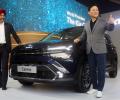
'India is the sixth-largest market for the Kia Corporation, and contributes 8 to 9 per cent to our global sales.' 'We are eyeing 10 per cent market share over the next few years depending on customer demand and new product innovations.'
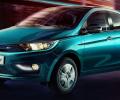
Tata Motors on Wednesday unveiled Tigor EV, its second electric model in the personal mobility space after Nexon EV. The auto major has tasted success with Nexon EV, which currently commands about 70 per cent market share in the domestic electric vehicle segment. The Tigor EV comes powered by the company's high voltage electric architecture - Ziptron - and has been developed based on three pillars of technology, comfort and safety.

US-based chipmaker Micron Technology is expecting demand for semiconductors to rise significantly in the next few years, globally and in India, as memory consumption is going up, largely driven by the widespread adoption of technologies like artificial intelligence (AI). "Memory consumption is expected to double by the end of the decade and the biggest driver in this is AI. "While it's natural to talk about compute and GPUs (graphics processing units) in the context of AI, it is not to be forgotten that the true enabler for AI is memory ... in all the AI engines that we talk about, there is a lot of need to access memory quickly," Anand Ramamoorthy, managing director, Micron Technology India, told Business Standard.

Honda Motorcycle and Scooter India (HMSI) on Wednesday forayed into the fast-growing domestic electric mobility market with the introduction of e-scooters, ACTIVA e: and QC1, with swappable and fixed batteries. With this, the Japanese two-wheeler maker will now be competing with other legacy players such as Bajaj Auto, Hero MotoCorp, TVS Group as well as pure EV players like Ather and Ola, who already have a good presence in the segment, which is growing at 34 per cent year-on-year.
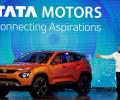
Homegrown auto major Tata Motors on Tuesday said it will raise $1 billion (Rs 7,500 crore) in its passenger electric vehicle business from TPG Rise Climate at a valuation of up to $9.1 billion. Tata Motors Ltd (TML) and TPG Rise Climate, the dedicated climate investing strategy of private investment firm TPG, have entered into a binding agreement in this regard. Under the agreement, TPG Rise Climate along with its co-investor ADQ, will invest in a subsidiary of Tata Motors that will be newly incorporated, the company said in a statement.
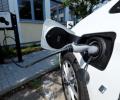
Electric vehicle market is likely to attract investments of Rs 94,000 crore over the next five years and is expected to generate business opportunities in the real estate sector, according to a joint report by Colliers India and Indospace. The report 'Electric Mobility in Full Gear' mentioned that the electric vehicle (EV) industry in India is currently at a nascent stage but it is likely to grow, backed by government initiatives and a move towards recognising climate change. "India is taking a step towards sustainability and has vowed to cut its carbon emissions. "At the recently concluded CoP26 summit, India pledged to reach net-zero carbon emissions by 2070. "In India, the transport sector is currently the third-largest emitter of CO2. This is leading to increased thrust on EVs in India," it said.

Tata Motors is actively considering tapping into some of the export markets beyond South Asia, for its range of electric vehicles (EVs) as it sees an opportunity of selling affordable EVs in markets outside India. The export plans will coincide with the commercial launch of the Curvve - an electric SUV concept that broke cover on Wednesday, in two years from now, Shailesh Chandra, MD, Tata Motors PVs and Electric Mobility, told Business Standard. "We are actively thinking of the international markets and we would like to go with a portfolio of products. "We have identified a few markets and in a couple of years, we should commence the same," said Chandra.

'The customer is fast changing, and she demands newer experiences that wealth can buy.'

Some of the key names include: Maruti, M&M, Ashok Leyland, Britannia, Ultratech, JK Cement, Havells, Voltas, Amber, Metro, Trent, LemonTree, Indian Hotels, Niva Bupa, HDFC Life, IGL, Acme Solar, Suzlon, Swiggy, Delhivery, ICICI Bank, HDFC Bank, Bajaj Finance, Shriram Finance," according to a report by Motilal Oswal Financial Services.

India's e-commerce market alone is projected to reach $200 billion by 2026, making it a prime industry for ambitious entrepreneurs, explains rediffGURU Harsh Bharwani.

India will not tailor its policies to suit US EV maker Tesla, and its laws and tariff rules will be formulated to attract all-electric vehicle manufacturers from across the world to set up a base in the world's fastest-growing economy, Commerce and Industry Minister Piyush Goyal said. Tesla has been seeking an initial tariff concession that would allow it to offset 70 per cent customs duty for cars priced less than $40,000, and 100 per cent for cars of higher value.

This year's edition, three years lost to the pandemic and scheduling, wore a distinctive shade of green, and, as would befit an era of technology shift from internal combustion engines to electric motors, had a clutch of high-technology exhibits and concepts. But the excitement of the expo's heyday was missing.

Finance Minister (FM) Nirmala Sitharaman has presented a forward-looking Budget, reinforcing the government's commitment to 'Reform, Perform, and Transform'.

Asserting that India has full potential to emerge as a global hub for electric vehicles by 2025, Union Minister Nitin Gadkari on Friday asked automobile manufacturers to reduce cost and forego profit initially to capture market and fuel growth. Once the market picks up there will not be any looking back, Road Transport and Highways and MSMEs Minister Gadkari said, promising all support to manufacturers in the initiative aimed at cutting India's huge import costs of crude and arresting pollution. The minister said he is scheduled to make an hour-long presentation on EVs before the Chief Justice of India post-Diwali.
EV players suggest a reduction in the goods and services tax on batteries from 18 to 5 per cent as it would help push demand.

India's planned transition to electric vehicles will drastically affect the commodities market, says Aditya Gandhi

Amid challenging market environment, Maruti Suzuki India and Mahindra & Mahindra reported an increase in vehicle dispatches to dealers last month while Tata Motors and Hyundai saw a year-on-year drop in sales.

When Gensol Engineering made its public market debut through a small and medium enterprises (SME) initial public offering (IPO) in September 2019, its promoters held a commanding 96 per cent stake. Now, that figure has shrunk to a "negligible" fraction.

India and the United States will finalize the contours, schedule of negotiations, and terms of reference for a proposed bilateral trade agreement (BTA) during a three-day meeting beginning Tuesday. The agreement is expected to be finalized in two tranches, with the first phase focusing on goods trade. The US team, led by Assistant US Trade Representative for South and Central Asia Brendan Lynch, will be in India from March 25-29 to discuss the agreement. Both countries are aiming to conclude the first phase of the agreement by fall 2025.

Posco Daewoo, the South Korean conglomerate whose Cielo sedan and Matiz hatchback were once the pride of Indian car owners, is looking to re-enter India. And its return journey is riding on plans to sell electric bikes and e-cycles. The company termed India's robust economic growth and surging consumer demand as reasons behind its comeback plans, saying they make India "one of the world's most promising consumer markets," according to Y S Choi, general manager, Posco Daewoo South Korea.

The company is eyeing sales of 8,000 units per month for the Kylaq, which starts at Rs 7.89 lakh (ex-showroom) and boasts 96 per cent localisation.

Ahead of the upcoming Union Budget, Society of Manufacturers of Electric Vehicles (SMEV) has asked Finance Minister Nirmala Sitharaman to either rejig the FAME II scheme or reintroduce FAME I, saying the programme meant to promote EVs in its second avatar has been able to achieve less than 10 per cent of its target. The Rs 10,000-crore FAME-II scheme which is to be implemented over a period of three years, came into effect from April 1, 2019. It is the expanded version of FAME India I (Faster Adoption and Manufacturing of (Hybrid) and Electric Vehicles (FAME) which was launched on April 1, 2015, with a total outlay of Rs 895 crore.
'Our strategy is intact and our important pillars for India -- the SUV roll-out and the focus on the cost of ownership of a car -- remain in focus'

With Kona catering for the high-end market, the South Korean automobile conglomerate wants to introduce a product in the EV segment to address the mass segment.

The push given to rooftop solar installation in the Interim Budget ties in with its high rate of adoption in Tier-II and -III cities of India. If original equipment manufacturers (OEMs) in the automobile industry, government, and the solar sector are to be believed, in cities of Rajasthan, Gujarat, and Kerala, 45-50 per cent of electric-vehicle (EV) users are employing rooftop power to charge their vehicles. This is compared to the national average of 25 per cent, say industry sources.

...But sales of domestic passenger vehicles dropped 2% to 3% year-on-year in August owing to low demand.
The $306-million investment in Ola Electric Mobility by SoftBank Corp, Arun Sarin Family, Ratan Tata and Matrix has been the biggest funding in this space in value terms this year.

'In terms of incentives, if you think about it, hybrids are a 20-year-old technology.'

Indian passenger vehicles market registered record wholesales of 43 lakh units in 2024, with companies like market leader Maruti Suzuki, Hyundai, Tata Motors, Toyota Kirloskar Motor, and Kia posting their best-ever annual domestic sales. The continued growth of SUVs, along with rural markets playing a key role in driving up car sales, helped the industry better the previous best of nearly 41.1 lakh units posted in 2023.

'We are seeing one of the highest discounts in recent years across companies.' 'October is a crucial month with several festivals coming up.'

BMW Group India recorded its highest annual sales on the back of strong demand for its top-end ICE (internal combustion engine) and electric vehicles (EVs). The German luxury automaker on Thursday announced that its domestic car sales jumped 18 per cent year-on-year (Y-o-Y) to 14,172 units in calendar year 2023 (CY23). This mirrored a trend in the luxury space, with its peers also reporting record numbers.
